Ghent · Columbia County · Hudson Valley, NY
Welcome to Dropstone Farm in Ghent, New York.
We are a small homestead on nine acres in the beautiful Hudson Valley. We raise rotationally grazed KuneKune pigs, pastured chicken, and eggs.
What we raise
After learning about how most food in our country is grown and raised, we felt that we needed to take responsibility for our own food. Everything we raise here started from that, and we do all of the work ourselves.
KuneKune pigs
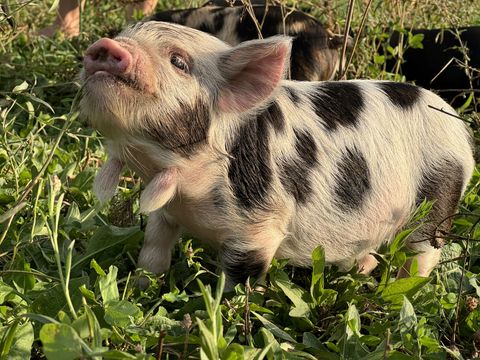
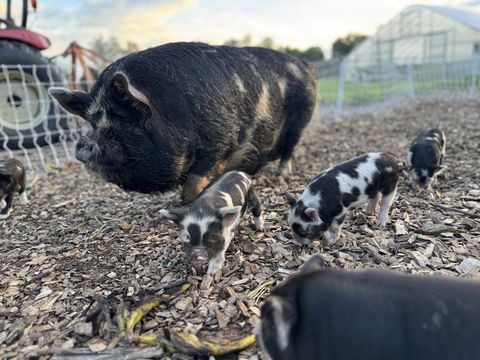
A special breed with a wonderful disposition. KuneKunes are friendly, easy to handle, and happy on grass, which makes them great homesteading animals. We keep a small breeding herd, and sell piglets in the early fall.
See what is available →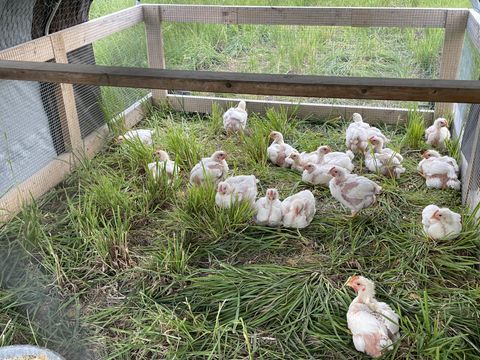
Pastured chicken
We raise our own meat birds on pasture and process them right here on the farm, in small batches, so we know exactly how every bird was raised.
Eggs
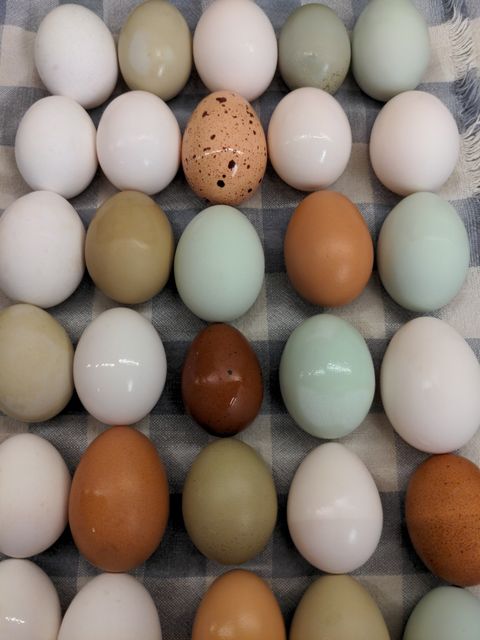
Our laying flock has been here since 2019. The chickens follow the pigs around the pasture, working through each paddock after the pigs move on. The two work together as a system, and nothing is wasted.
How the pigs are kept
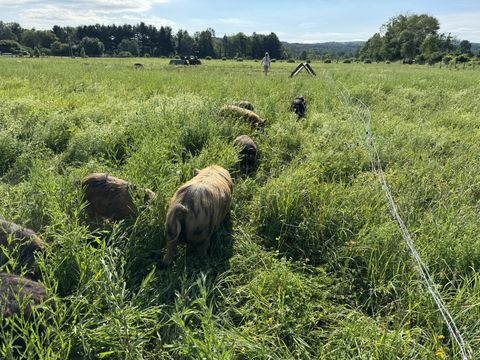
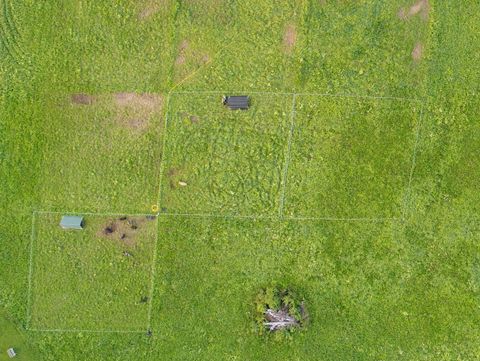
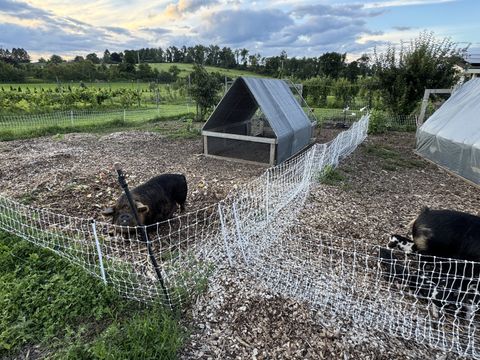
Our pigs are rotationally grazed on pasture that is never treated or sprayed with chemicals. We move them to fresh ground before a paddock is worn down, which keeps the grass growing back strong and breaks the parasite cycle without medication. KuneKunes also do not have a strong drive to root, so they graze the ground rather than tear it up. The chickens follow along behind them, and between the two, they do all of our fertilizing.
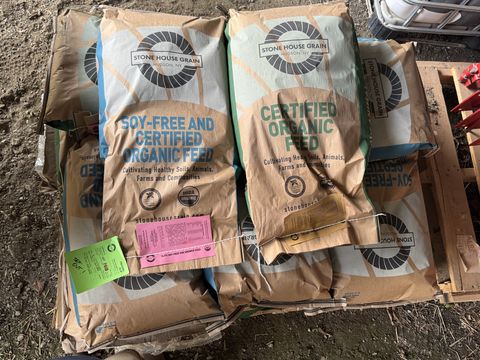
In summer they graze on grass, and also get organic produce from our local food co-op. In winter they still get the co-op produce and our kitchen scraps, but most of their calories come from certified organic, soy-free feed from Stone House Grain in Hudson, New York. Stone House grows and mills its own grain about twenty minutes from us, so we know exactly where our feed comes from.
Available now
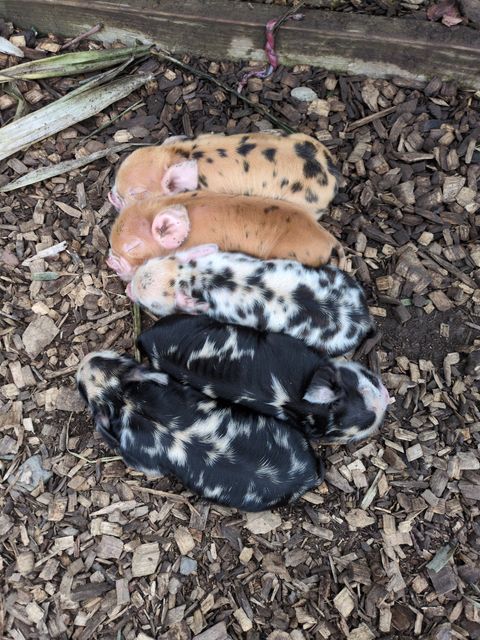
Our August 2026 KuneKune piglets are available now. Call or text to reserve one, or to set up a time to come meet them.
How we got here
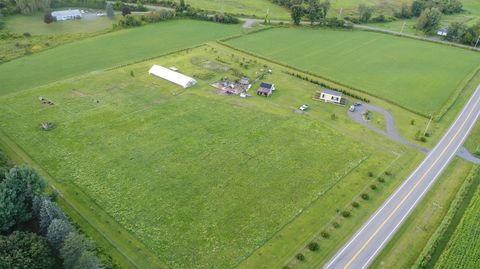
We spent three years looking for the right piece of land. This one is flat, well drained, and has plenty of water underground, and the drive out to see it the first time is what sold us.
We started with six acres. We filed plans with the town in July 2015, for a small house and a hop yard. The well, the electric, the septic, and the foundation piers all went in over four days that August, which is a pace we have never matched since.
We built the house ourselves, with a lot of help from friends and family. Three generations of family worked on it. Our certificate of occupancy came through in August 2016, a year of weekends after we broke ground.
We planted our first hops that first summer. The bees came in spring 2016, and by that September we were running nine hives. We planted wine grapes in 2019, and a young fruit orchard is now coming into bearing.
The laying flock arrived in 2019, starting with fifty hens, and the numbers have been in constant flux ever since. In early 2023 we added KuneKune pigs, which have since become the center of the farm. Later we bought three more acres from our neighbors, which brought the farm to nine acres.
Why KuneKunes
KuneKunes are a special breed with a wonderful disposition. They are friendly, easy to handle, happy to graze, and under the right conditions they keep a pasture clear with very little rooting. They are small and slow growing, which suits a place our size, and gentle enough to be safe around visitors. They have a very low drive to escape and are, honestly, super chill. Our sows let us right in with them and let us handle their piglets.
We are also fond of New Zealand, where the breed comes from, and of its history. KuneKunes were nearly lost. By the 1970s only about fifty purebred pigs were thought to be left, and in 1978 two wildlife park owners, Michael Willis and John Simister, set out across New Zealand to find them. They started a breeding program from just six sow lines and three boar lines, and it brought the breed back.
The hoop house
Our 30 by 96 foot tunnel went up in late 2025, and it is still a work in progress. We are still working out what we will grow in it, but it has already become one of the most useful buildings on the farm. It has a sink with hot and cold water and a fridge, and this year we processed 100 meat chickens in it. We expect to use it for processing everything we raise. There are party lights too, for an evening dinner out in the field if we are feeling fancy. We may even grow a few plants in it.
Come see it for yourself.
We'd be happy to show you around. Farm visits are by appointment only, so call or text and we will find a time that works.